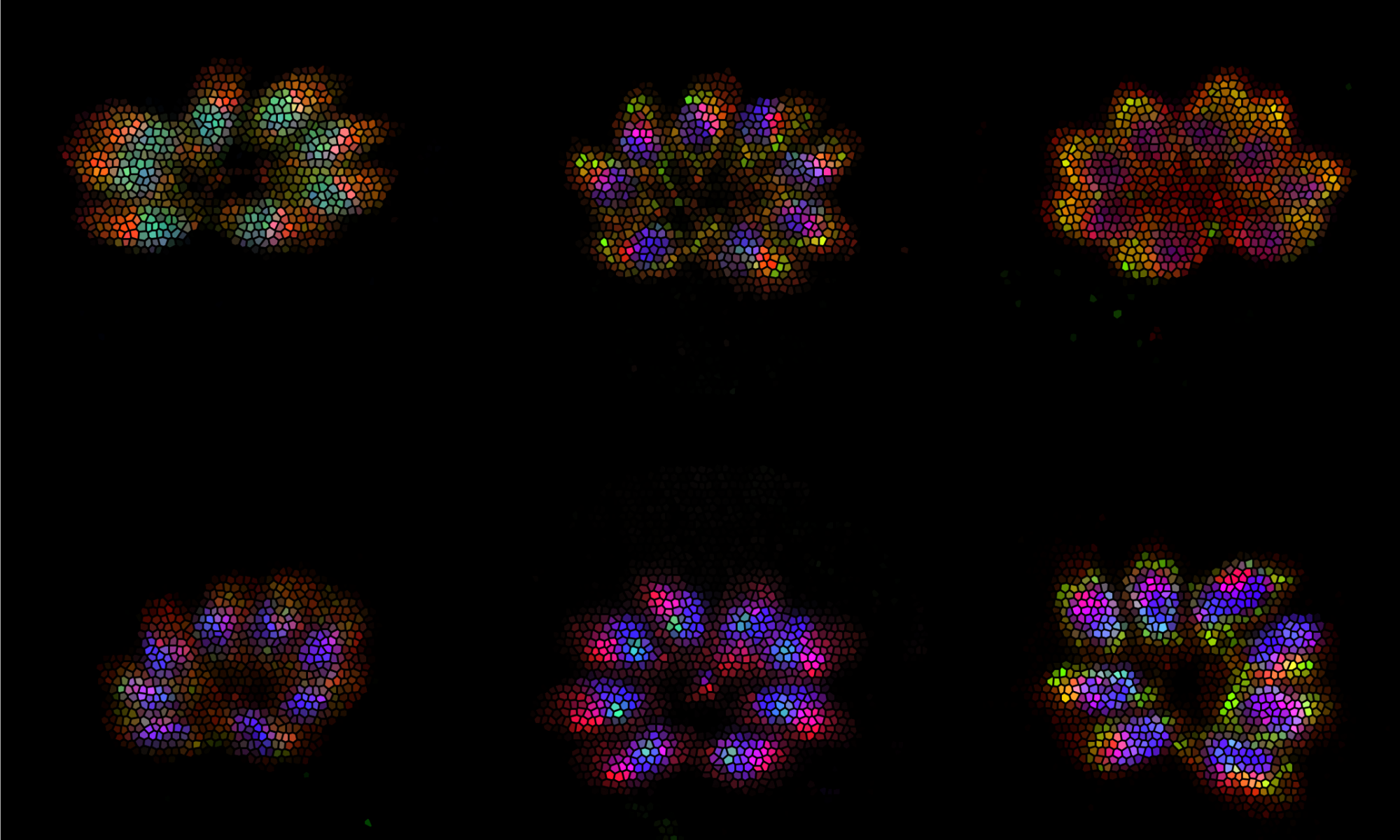

The apicomplexan ATP synthase

The mitochondrial ATP synthase is a multi-subunit complex coupling the proton-motive force, generated by respiration, to ATP synthesis. This crucial process is highly conserved in most eukaryotes. While yeast and mammals have mitochondrial ATP synthases with 17 to 18 different proteins, the T. gondii ATP synthase harbors 32 subunits. Strikingly, 17 of these subunits are unique to these parasites and have no counterparts in other organisms. We seek to understand the function of these apicomplexan-specific subunits, which may serve important roles within the ATP synthase complex and reveal new aspects of this important enzyme from both a functional and evolutionary perspective.
Inter-organellar communication in apicomplexans
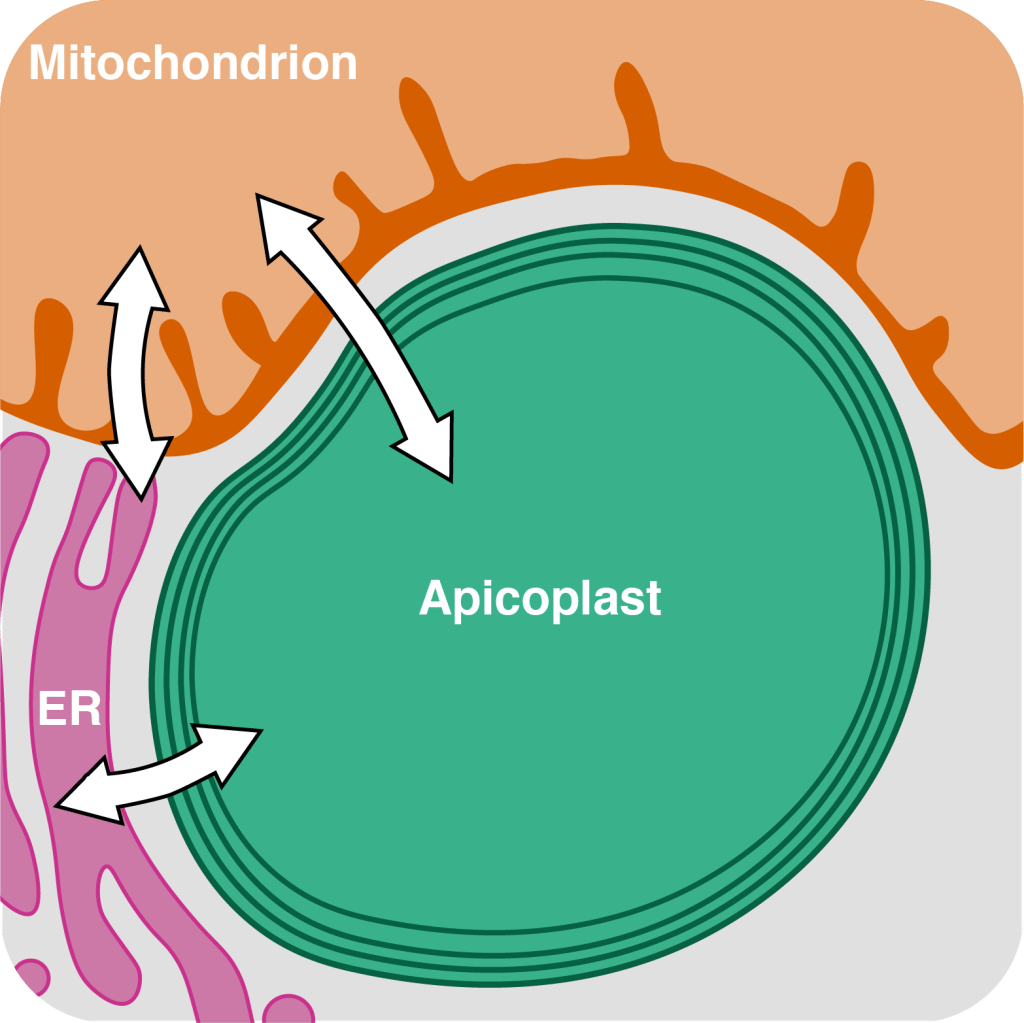
Inter-organellar communication is an essential process for cellular function and homeostasis. Within cells, organelles can interact through specialized regions called membrane contact sites (MCSs). However, our understanding of MCSs is primarily derived from a few metazoan models, such as yeast and mammals, leaving MCSs in other eukaryotes largely uncharacterized.
Most apicomplexans possess a single mitochondrion and an apicoplast, a non-photosynthetic plastid only found in these organisms. These two organelles are metabolic hubs that have co-evolved together and are essential for survival. Although a close physical interaction between the two organelles has been observed, the molecular identity of this interaction remains elusive. Our research aims to identify the molecular components that mediate the mitochondrion-apicoplast interaction, as well as MCSs involving other organelles like the endoplasmic reticulum, using genetic, biochemical and proteomic approaches.
 Huet Lab